

I Vibe-Coded a Social Media Intelligence Tool in 4 Days. Here’s What Actually Happened.
Over the past months, vibe coding has been everywhere. Social media, conversations, even within our own team at Hubert + Partners. So I decided to test it properly. Not a prototype, not a concept, but something real.
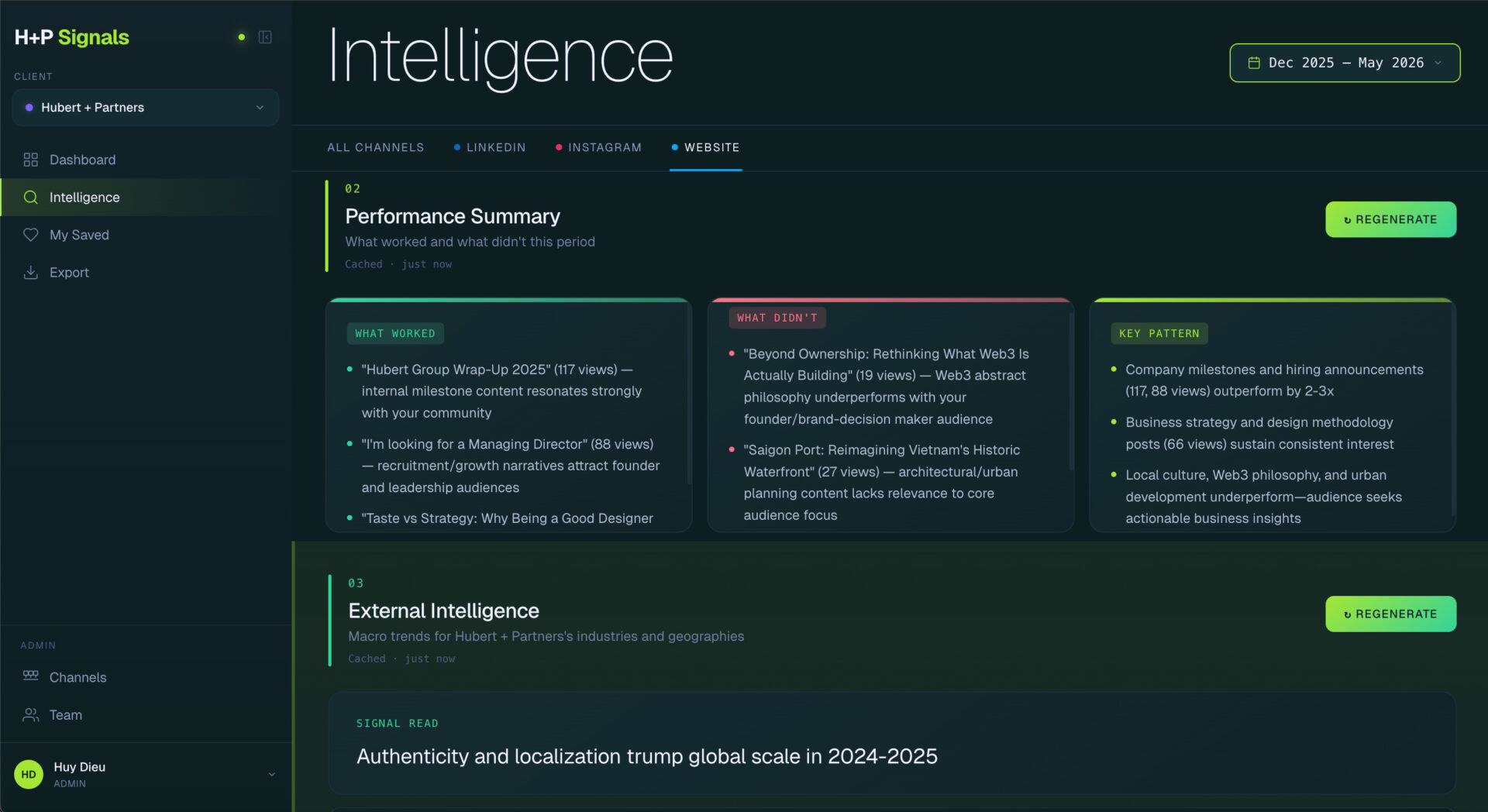
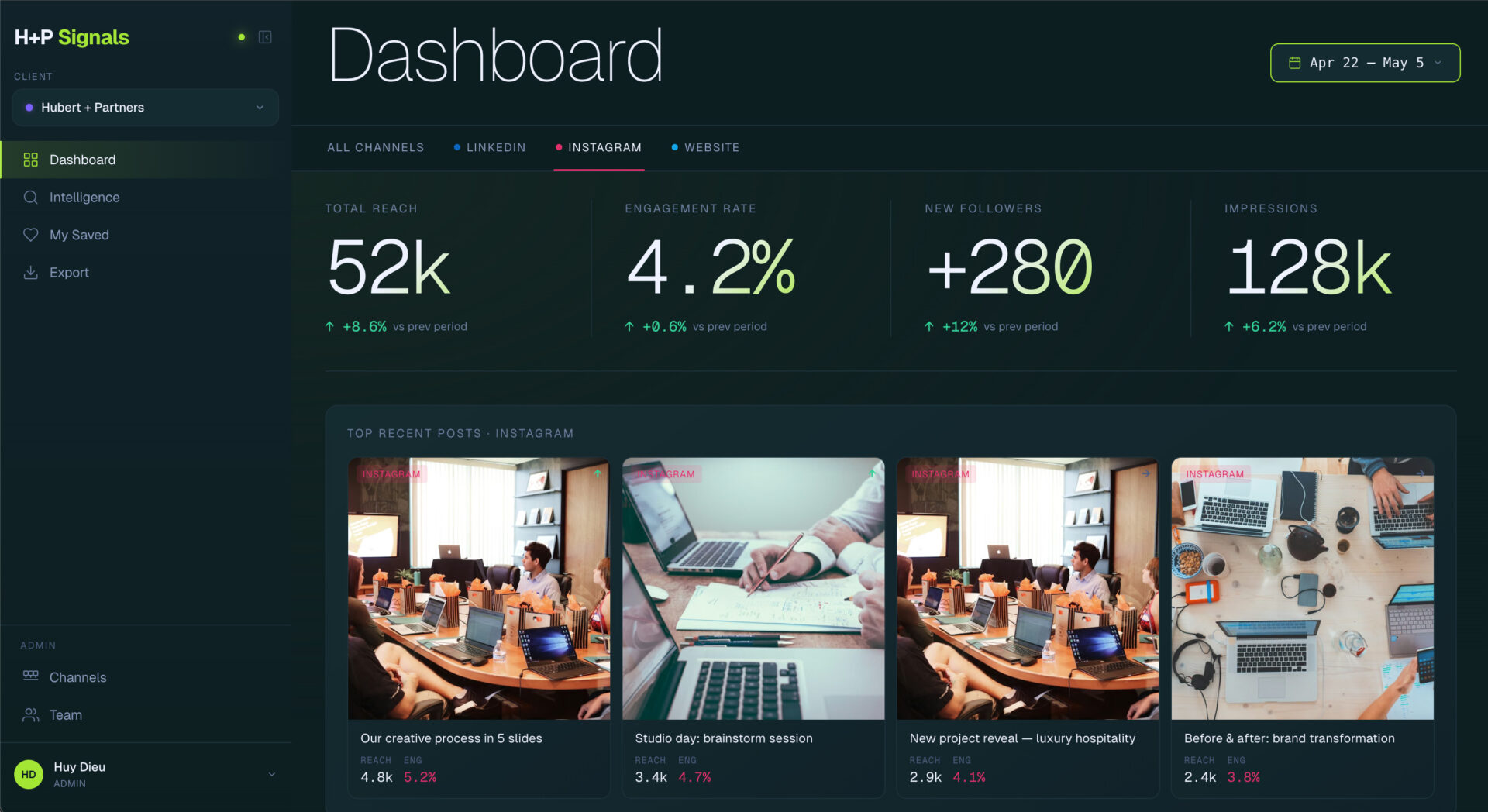
The idea was straightforward. I wanted one place that brings together social media performance across TikTok, Instagram, Facebook and LinkedIn, combined with website traffic and Google Reviews. On top of that, an AI layer that doesn’t just summarize data, but actually explains what’s working, what’s not, and why. And then push it further into something actionable. Content intelligence, trend insights, and ideas that can directly turn into briefs.
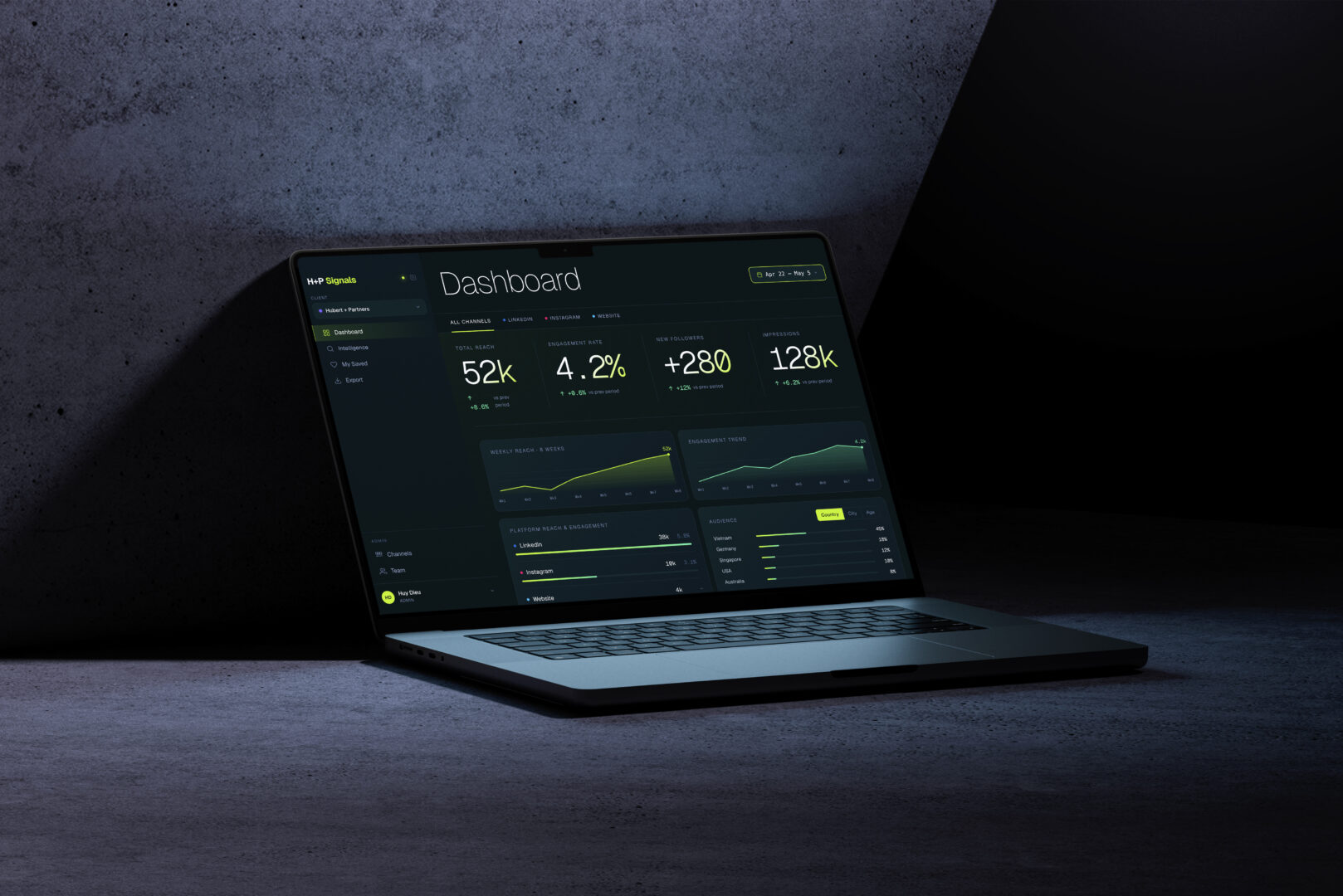
Within four days, I built a tool called Signal.
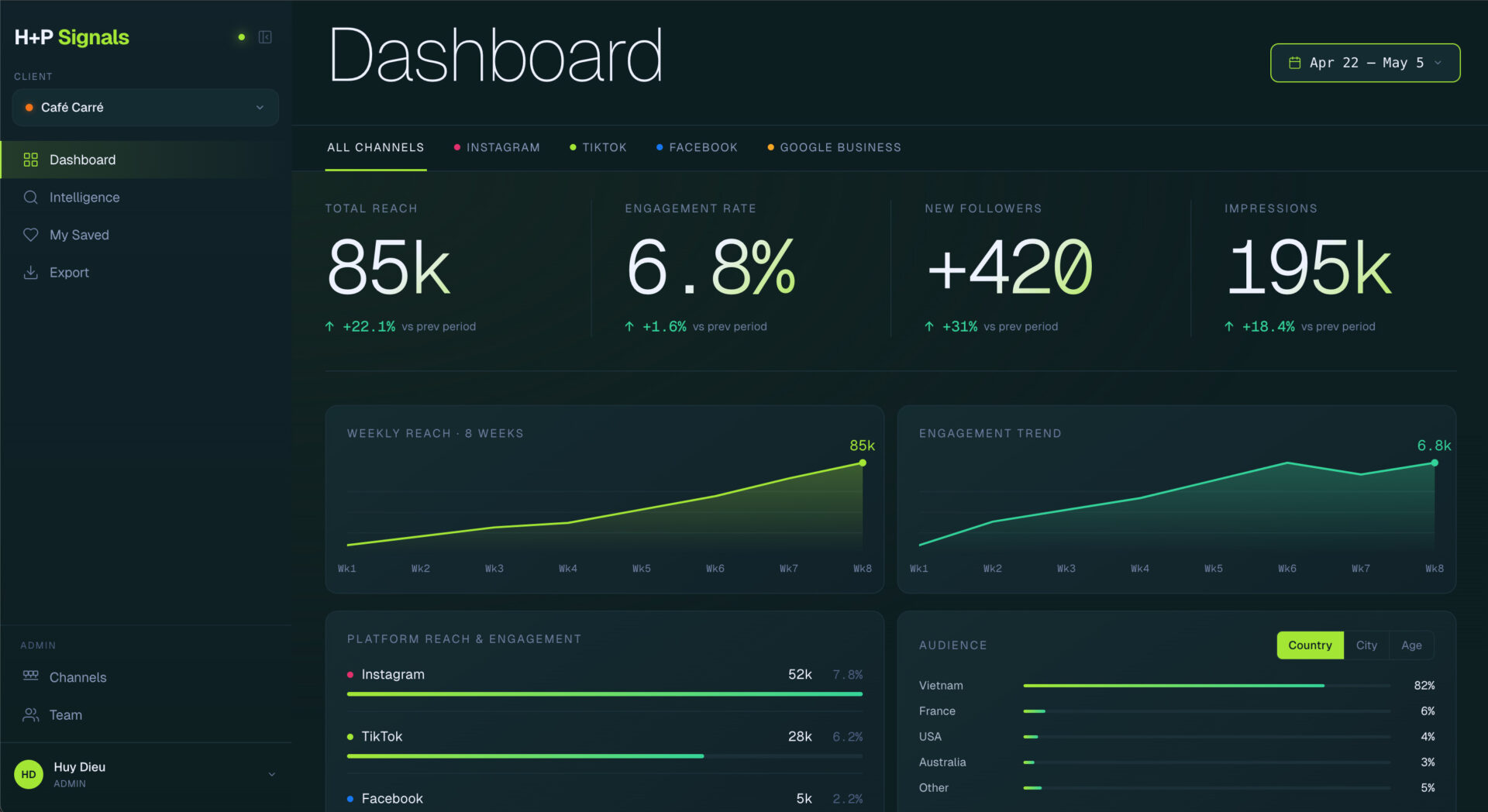
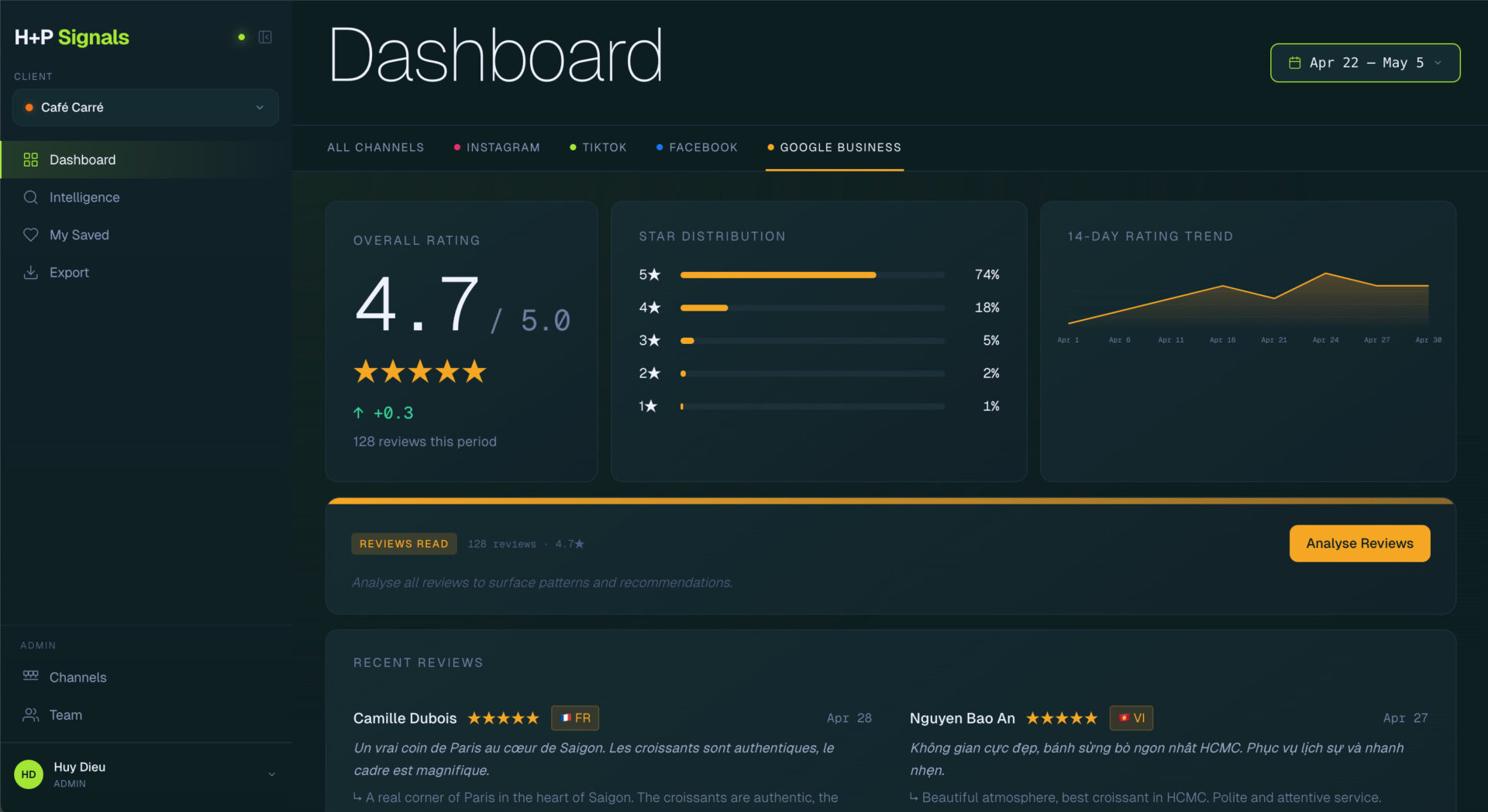
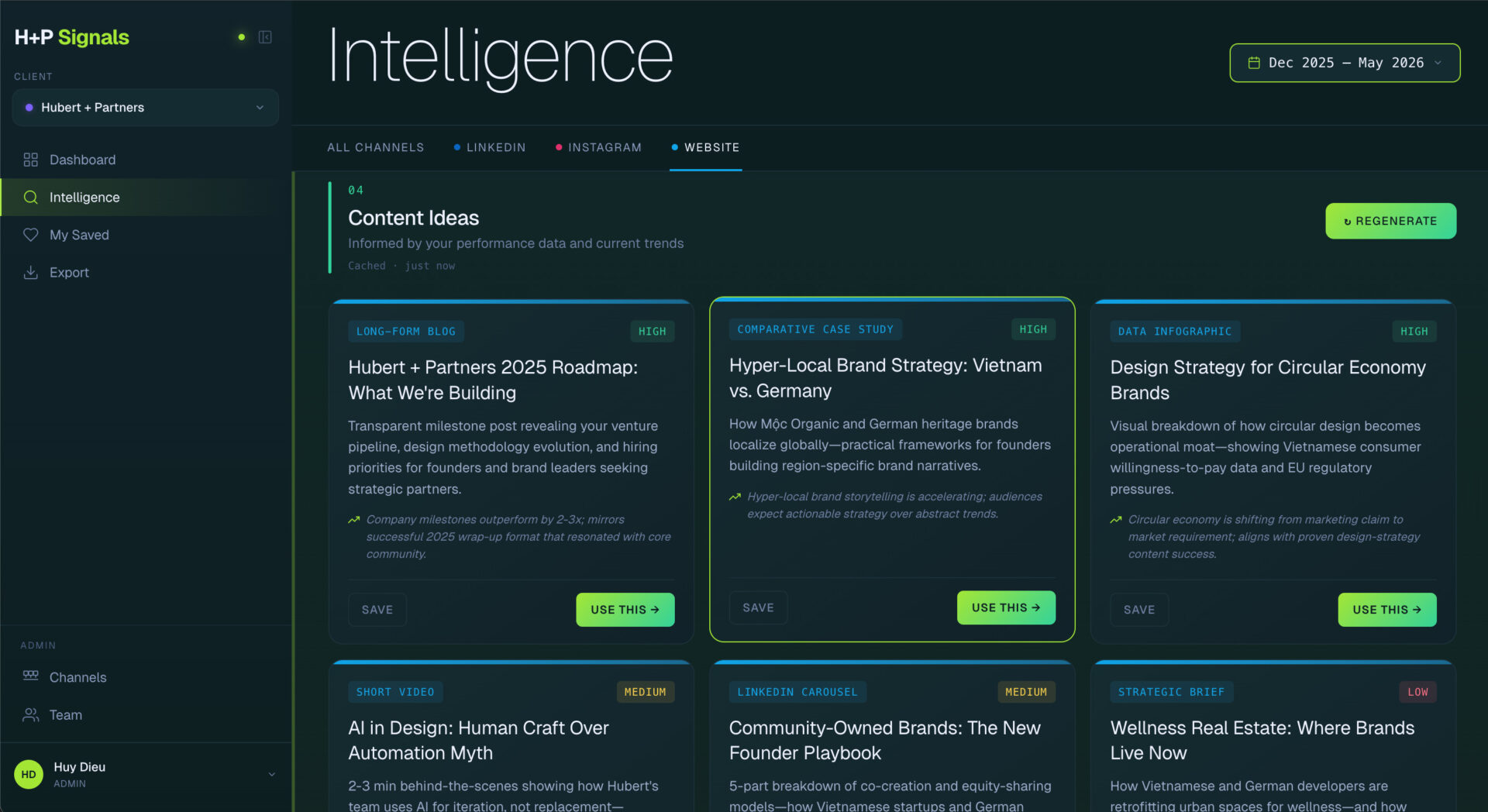
It’s a simple dashboard where I can switch between Hubert + Partners, Union Square Vietnam, and Café Carré, and see everything in one place. Each channel shows its own performance, but the interesting part is the layer on top. The AI looks at what performed well, connects it with external trends, and turns that into content ideas. From there, it generates structured briefs that you could hand to someone and they can start writing immediately.
The part that still feels strange is that I didn’t actually code it. The entire tool was built with Claude. I focused on direction, structure and how it should feel. Claude handled the execution.
That said, it was far from smooth.
It’s definitely not as easy as it looks in all those TikTok videos. There were a lot of bug fixing, a lot of back and forth, and moments where things just didn’t work for no clear reason. Claude would sometimes say something is fixed when it clearly wasn’t. You still need to be precise, patient, and willing to question the output.
What surprised me most was not the coding itself, but the speed of iteration. You see something in the browser that feels off, you describe it in plain language, and minutes later you get a new version. That loop changes how you think about building things. You don’t get stuck in technical limitations as quickly. Instead, the challenge becomes more understandable. Knowing what you actually want, and being able to articulate it.
That’s where the real shift is happening. The bottleneck is moving away from technical skill and towards judgment, taste and decision making.
I didn’t finish everything. Some data sources were too time-consuming to integrate properly, and at some point it didn’t make sense to keep pushing it further. But that wasn’t really the goal.
The goal was to understand what’s possible.
And after four days, it’s clear that we’re still very early in this. But also that this will change how products get built.
Next, I’ll probably go smaller. A simple micro tool, maybe even something completely unnecessary, just to keep exploring where this can go.